
Determine the mineral and element content in foods
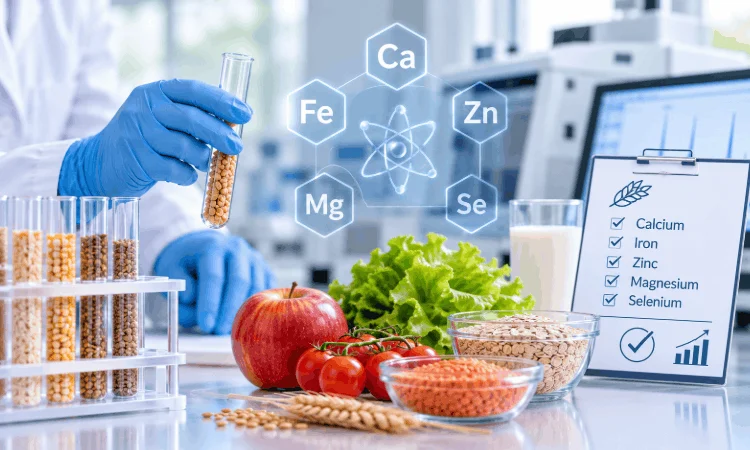
Mineral analyses are used to assess the specific element contents of foods. Sodium, potassium, calcium, magnesium, phosphorus, iron, zinc and other elements covered by PILAB can provide data for evaluating product composition, raw material comparison, and related nutritional information.
The scope also includes elements important in contamination assessments such as lead, cadmium, mercury and arsenic. Inorganic arsenic determination is also specified. The result of a specific chemical form is not the same as the total element amount; the request must clearly state the product and the element or form to be investigated.
- Heavy Metals
- Minerals
- Calcium
- Magnesium
- Phosphorus
- Iron
- Zinc
- Copper
- Manganese
- Selenium
Mineral analysis process
The unit of the results, the condition of the product being examined, and the target statement are important in the assessment. Controlling the nutritional mineral content and toxic element contamination are different purposes; the question being addressed in the request should be specified.
Identification of the element list | Evaluation of matrix suitability | Use of the results |
The relevant mineral or elements and the analysis purpose are shared. | The product's structure and applicable analysis scope for target elements are checked. | The results are evaluated with the relevant department and product information; nutrition statement conditions are also considered. |
Some analytical approaches may be similar; however, the target substances and evaluation purpose differ. Nutritional content and contamination risk must be defined separately.
It can be used with a calculation approach that complies with the relevant labeling rules. The calculated salt value must be separated from the directly measured sodium result.
Total element measurement does not always provide chemical type or form information. If investigation of a specific form is required, this request should be evaluated separately.