Determination of Dietary Fiber in Foods
Functional food production, in line with healthy nutrition trends and legal labeling regulations determination of dietary fiber in foods, It is one of the main topics of modern food analysis. Dietary fiber is not digested or absorbed in the small intestine, however, polysaccharides that can be partially or completely fermented in the large intestine, includes components such as oligosaccharides and lignin.
Within the framework of the Turkish Food Codex Regulation on Nutrition and Health Claims and the Regulation on Food Labelling and Consumer Information, accurate determination of the fiber content is of great importance both for food label compliance and for net carbohydrate and energy calculations. Our laboratory, determines the amount of dietary fiber in your products with high precision using an analytical infrastructure compliant with international standards.
Why is Dietary Fiber Determination Important in Foods?
Determining the amount of dietary fiber in pricing processes and commercial activities with scientific methods provides your brand with versatile advantages:
- Legal Verification of Fiber Declarations: Located on the packaging “It is a source of fiber” or “High fiber” proves with the official analysis report that the minimum threshold values in the legislation for nutrition statements are met.
- Net Carb and Calorie Calculation: It enables a much more accurate calculation of digestible carbohydrate and energy (kcal / kJ) values by subtracting dietary fiber from the total carbohydrate value.
- R&D and Formulation Development: Insulin, beta-glucan, pectin, It offers recipe optimization in products enriched with fiber sources such as resistant starch or wheat/oat bran.
- Quality and Standardization: Whole grain products, functional bars, ensures batch-based fiber consistency in bakery products and fortified foods.
Methods for Determining Dietary Fiber in Foods
Dietary fiber; soluble dietary fiber and insoluble dietary fiber consisting of two main fractions, and total dietary fiber is the sum of these two components. Internationally accepted methods are applied in our laboratory according to the product matrix and analysis scope:
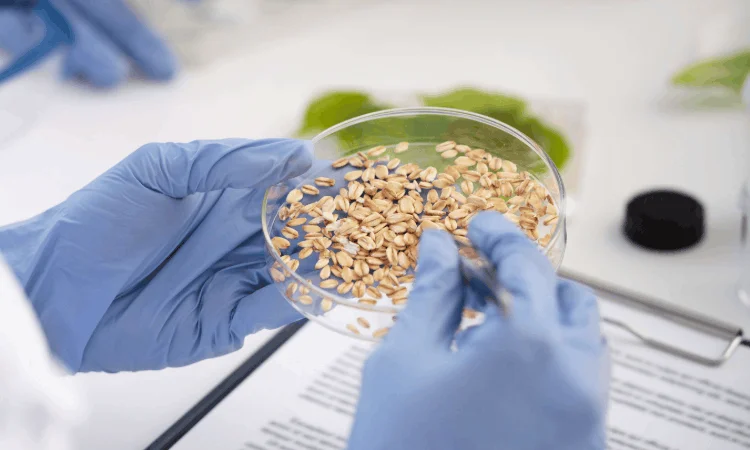
1. Enzymatic-Gravimetric Method (AOAC / ISO Reference Methods): Widely preferred in food analysis enzymatic-gravimetric method, is based on the principle of breaking down the starch and proteins in the sample with specific enzymes (alpha-amylase, protease, amyloglucosidase) and precipitating and weighing the indigestible fiber fractions. By also making ash and protein corrections, determination of dietary fiber in foods it is completed with high accuracy.
2. Soluble and Insoluble Fiber Fraction Analysis: For manufacturers who want to examine the physiological and technological properties of the product in more detail, soluble fiber (associated with viscosity and prebiotic effect) and insoluble fiber (associated with bulk and bowel transit time) fractions can be evaluated separately or as total dietary fiber.
Which Product Groups Are Tested for Dietary Fiber?
With our advanced analysis infrastructure, we provide services across a very wide range of foods and functional products:
- Whole grain breads, flours, pastas, and breakfast cereals
- Biscuits, crackers, cakes, cookies, and bakery products
- Legumes, dried fruits, nuts, and seeds
- Functional foods, fiber bars, shakes, and sports products
- Dairy products, yogurts, and fiber-fortified beverages
- Fruit and vegetable-based products, sauces, and ready-to-eat meals
- Infant formulas and foods for special nutritional purposes
Frequently Asked Questions
How much dietary fiber is required to use the claim "High in fiber" on the label?
The conditions of use for nutrition claims are determined according to the relevant food legislation. Whether the "source of fiber" and "high fiber" threshold values in the legislation are met must be verified by the analysis result of the product per 100 g / 100 ml or per portion.
Can it be performed together with carbohydrate and energy analysis?
Yes. Dietary fiber determination, when integrated with moisture, ash, protein, fat, and sugar analyses, provides a complete data set for carbohydrate, net carbohydrate, and energy calculations in the nutrition facts table.
You can contact our expert team to verify the fiber declarations of your products in compliance with legal regulations and to get a detailed quote regarding our dietary fiber determination in foods service.