

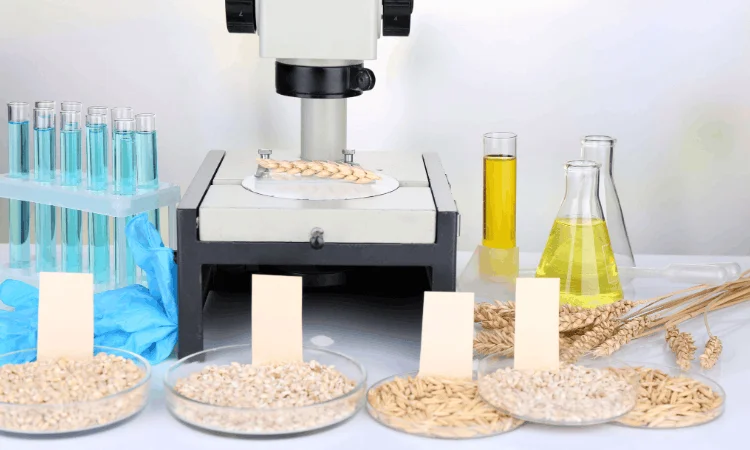
While inspections of agricultural and food products at European Union customs points intensify during the autumn season, rejections caused by pesticide residues and mold toxins have taken center stage on the industry agenda. Faced with rising return costs, exporters are turning to comprehensive laboratory tests before dispatching products.
ISTANBUL – Quality and safety inspections for shipments to the European Union (EU) countries—Turkey's largest agricultural and food market—have become even stricter with the new harvest season. Residue findings, particularly in the dried fruit, nuts, and fresh vegetables groups, are leading to border delays and product rejection decisions. The high logistics and disposal costs generated by batches returned from customs are forcing exporting companies to move risk management to the pre-shipment stage.
What is Chlorpyrifos?
It is a chemical pesticide/insecticide active ingredient belonging to the organophosphorus (organophosphate) group, developed to combat harmful bugs and pests in agriculture.
- Effect and Risk: It acts by targeting the nervous system of pests. However, scientific studies have shown that when it leaves residues on foods, it can also cause adverse effects on human health (particularly posing risks to nervous system development and hormone balance).
- Legal Status: Due to the risks it poses to human health and the environment, its use has been banned in all or a large majority of agricultural production in many countries, including the European Union (since 2020) and Turkey. Even trace amounts detected in foods are grounds for border rejection.
What is Aflatoxin?
It is a natural mold toxin (mycotoxin) that is toxic and carcinogenic, produced by certain molds, notably Aspergillus flavus and Aspergillus parasiticus.
- How Does It Form? It breeds when agricultural products are exposed to high humidity and temperature during ripening in the field, harvesting, drying, or storage. It is most frequently seen in dried figs, pistachios, hazelnuts, peanuts, dried apricots, corn, and spices.
- Effect and Risk: It is one of the most powerful known carcinogens in nature; it exerts a toxic effect particularly on the liver and suppresses the immune system. Aflatoxin B1 is the most dangerous type.
- Legal Status: Since it cannot be completely destroyed by heat treatment (cooking or roasting), the maximum amounts that can be found in foods are restricted to very low limits (at the ppb – parts per billion level) by the EU and the Turkish Food Codex.
Aflatoxin in Dried Fruit, Chlorpyrifos in Fresh Vegetables Stand Out
The fact that aflatoxin and ochratoxin values, which develop due to inappropriate harvesting, drying, or storage conditions in the dried fruit and nut group, exceed legal limits stands out as the primary cause of rejections in new season shipments, which intensify during the autumn months.
On the fresh fruit and vegetable side, the detection of pesticide active ingredients such as chlorpyrifos and chlorpyrifos-methyl, whose use is strictly prohibited in EU legislation particularly in products like peppers, directly results in border rejection. Every shipment returned from the border gates lays the groundwork for further increasing the frequency of physical inspections targeted at the relevant product group.
Return Costs Pushed Exporters Toward New Measures
A product batch rejected at the customs gate does not only cause the exporter to lose the value of the goods. International shipping, cold chain maintenance, customs storage fees, and mandatory disposal procedures carried out according to European standards severely erode companies' profitability. In addition, repeated non-compliances damage the brand perception and supply reliability of Turkish-origin products in the European market.
The Solution Starts in the Field: The Pre-Shipment Pre-Analysis Era
Food exporters wanting to prevent surprises that may occur at border gates have shifted their quality control processes from the port stage to production and packaging facilities. Prominent new practices in the industry are listed as follows:
- Comprehensive Laboratory Screenings: Samples taken from export-bound batches undergo multi-pesticide residue screening and mycotoxin analyses in internationally accredited laboratories prior to shipment.
- Storage and Humidity Control: The temperature and humidity balance that triggers toxin formation in products such as dried figs, pistachios, and similar items is kept under control in storage facilities using digital tracking systems.
- Field-Based Traceability: In the supply of fresh vegetables and fruits, plant protection products used by producers are recorded, ensuring that banned active ingredients are eliminated before harvest.
Industry representatives emphasize that pre-shipment pre-analyses are no longer an optional practice but have become a fundamental standard of export operations in order to preserve competitiveness in the EU market.