Determination of Peroxide Value in Vegetable Oils
In terms of food safety, shelf life management, and fat quality control, determination of peroxide value in vegetable oils is one of the indicators in the oxidative degradation process of fats. Peroxide Value (PV) refers to the amount of hydroperoxides, which are primary oxidation products formed as a result of the reaction of unsaturated fatty acids present in the oil with oxygen, and is usually reported in units of milliequivalents of oxygen / kg of oil (meq O2/kg\text{meq O}_2/\text{kg}meq O2/kg).
Within the scope of the Turkish Food Codex Communiqué on Plant-Named Oils and international standards, the determination of peroxide value is of great importance for verifying the freshness, storage conditions, and compliance with regulatory limits of liquid and solid fats. Our laboratory determines the peroxide value in your oil samples with high precision using an analytical infrastructure compatible with international reference methods.
Why is Peroxide Value Determination Important?
Regular measurement of the peroxide value at every stage, from production lines to storage and shipment, provides strong advantages for your brand and quality system:
- Early Detection of Primary Oxidation: Reveals the initial stage of oxidation before sensory "rancidity" (deterioration of odor and taste) reaches advanced levels.
- Monitoring Shelf Life and Storage Conditions: Demonstrates the effect of heat, light, and oxygen contact on the oil; verifies the effectiveness of packaging selection and storage conditions (temperature, dark environment, nitrogen atmosphere, etc.).
- Regulatory Compliance and Commercial Trust: Proves compliance with maximum peroxide limits in product communiqués through an official analysis report, offering assurance in domestic market audits and export processes.
- Raw Material Acceptance and Process Control: Confirms that supplied crude or refined oils meet quality specifications; supports quality monitoring in oils subjected to frying and thermal processing.
Method for Determination of Peroxide Value in Vegetable Oils
The iodometric titration method is applied in our laboratory in accordance with international standards (TS EN ISO 3960, etc.):
Iodometric Titration Method
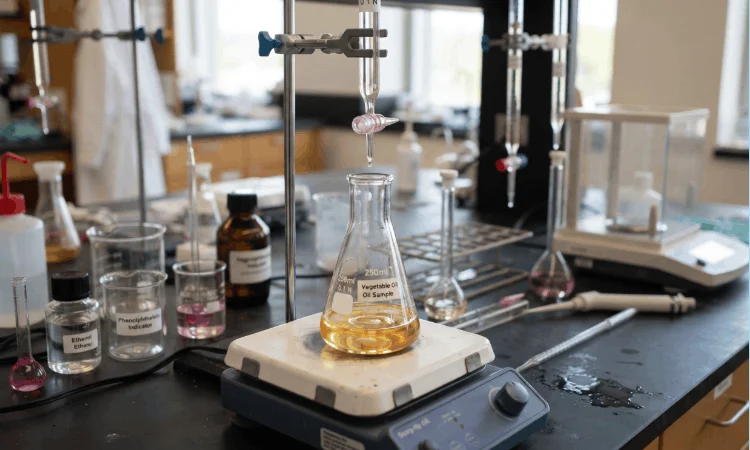
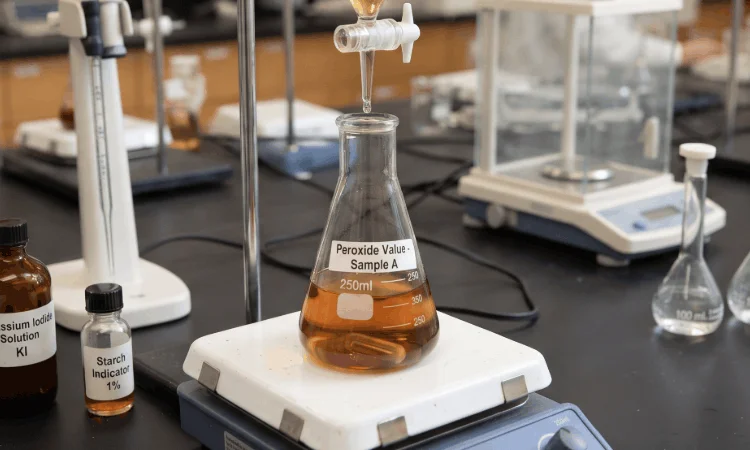
The homogenized oil sample is dissolved in a suitable solvent mixture (for example, isooctane/acetic acid or chloroform/acetic acid), and a saturated potassium iodide (KIKIKI) solution is added to the medium. Peroxides in the oil oxidize iodide ions to free iodine (I2I_2I2). The liberated iodine is titrated with standard sodium thiosulfate (Na2S2O3\text{Na}_2\text{S}_2\text{O}_3Na2S2O3) solution in the presence of starch indicator, and the peroxide value (meq O2/kg\text{meq O}_2/\text{kg}meq O2/kg) is calculated based on the volume of titrant consumed.
Which Oil and Product Groups Are Subjected to Peroxide Analysis?
We provide services across a very wide range of oils and fatty foods with our advanced laboratory infrastructure:
- Olive Oils: Natural Pressed, Natural First, Refined and Riviera olive oils
- Seed Oils: Sunflower oil, corn oil, canola oil, soybean oil, and cottonseed oil
- Tropical and Specialty Oils: Palm oil, coconut oil, hazelnut oil, walnut, and flaxseed oil
- Solid and Emulsion Fats: Margarines, butter, and specialty confectionery/bakery fats
- Fat-Containing Foods: Nuts, chips, crackers, biscuits, and fat-extracted products
What is the difference between peroxide value and free fatty acid?
While peroxide value measures the level of oxidative (primary) degradation resulting from the reaction of oil with oxygen; free fatty acids (FFA) indicate hydrolytic degradation through free fatty acids released by the breakdown of triglycerides. Both are examined together in a comprehensive evaluation of oil quality.
You can contact our expert team to verify the freshness, shelf-life durability, and regulatory compliance of your products with scientific data, and to get a detailed quote regarding our determination of peroxide value in vegetable oils service.