Moisture Determination in Foods
In terms of food safety, shelf life management, texture properties, and nutritional value calculations, moisture determination in foods (moisture content determination) is one of the most frequently resorted parameters in laboratory analyses. The amount of water in food directly affects the growth rate of microorganisms, enzymatic and chemical degradation reactions, physical properties of the product such as hardness/crispness/flowability, and its commercial weight.
Additionally, while calculating carbohydrates in foods, the moisture value is one of the core components used in the difference method. Our laboratory provides reliable data for your production and quality processes by determining the moisture content in your products with high precision using analytical devices and reference methods compliant with international standards.
Why Is Moisture Determination in Foods Important?
Measuring the moisture content through scientific methods at every stage from production lines to storage and shipping provides versatile advantages to your business:
- Shelf Life and Microbiological Safety: High moisture values accelerate the growth of mold, yeast, and bacteria, increasing the risk of spoilage; it ensures the preservation of safe storage limits, especially in flour, grains, spices, nuts, and dried fruits.
- Completion of Carbohydrate and Nutritional Value Calculations: The moisture ratio must be precisely known to accurately establish the dry matter balance when calculating carbohydrates via the difference method.
- Texture, Consistency, and Quality Standardization: It is a critical control point to preserve crispness in biscuits and chips, prevent lump formation in flour and milk powders, and achieve standard consistency in butter and tomato paste.
- Commercial Fairness and Regulatory Compliance: It documents compliance with the maximum moisture limits defined in Turkish Food Codex product communiqués; it prevents risks of unfair weight gain via water or regulatory violations.
Methods for Moisture Determination in Foods
Internationally valid reference methods are applied depending on the water retention characteristics of the product to be analyzed (free water, bound water, presence of volatile components, or sugar/fat concentration):
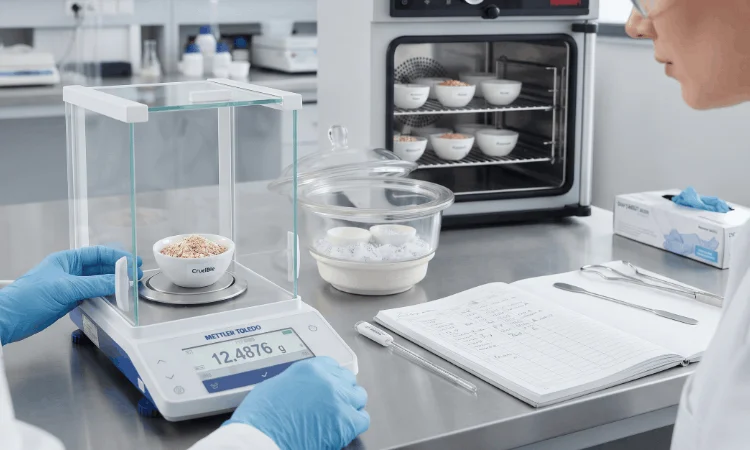
1. Gravimetric Oven Drying Method (Standard / Vacuum Oven): The most widely used oven method in food analyses is based on drying a homogenized sample in a pre-weighed tare container at a controlled temperature (e.g., in a 103 °C – 105 °C air-circulated oven, or a vacuum oven for heat-sensitive/high-sugar products) until it reaches a constant weight. The moisture percentage (and dry matter ratio) is calculated from the weight difference before and after drying.
2. Karl Fischer Titration: It ensures the selective and highly precise determination of water through a chemical reaction, especially in products with very low moisture content (oils, chocolate, confections, dried foods) or in matrices where volatile matter loss might occur at high temperatures.
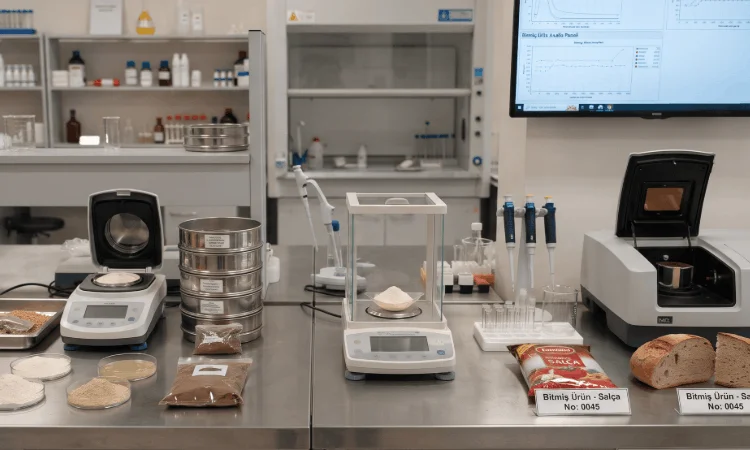
3. Infrared / Halogen Moisture Analyzers (Rapid Process Control): In-process moisture data is obtained in a short time using devices operating on the principle of infrared or halogen heating and an integrated precision balance, aimed at supporting rapid decision-making processes on the production line.
Which Product Groups Are Subjected to Moisture Analysis?
We provide services across a very wide range of foods, beverages, and feeds with our advanced laboratory infrastructure:
- Flour, semolina, bread, pasta, biscuits, cakes, and bakery products
- Grains, legumes, nuts, and oilseeds
- Spices, dried fruits and vegetables, tea, and coffee
- Butter, cheese, milk powder, yogurt, and dairy products
- Honey, molasses, jam, chocolate, confections, and confectionery products
- Tomato paste, sauces, instant soups, meat, and processed foods
- Animal feeds and feed raw materials
Are moisture determination and water activity the same thing?
No. Moisture determination refers to the weight percentage of total water in a food, whereas water activity ($a_w$) indicates how much of the water in the food is "available / free" for microorganisms and chemical reactions. These two parameters complement each other in shelf life and microbiological stability evaluations.
You can contact our expert team to secure your products' shelf life, quality standards, and nutritional value calculations, and to receive a detailed quote regarding our moisture determination in foods service.