Sensory Analysis in Foods
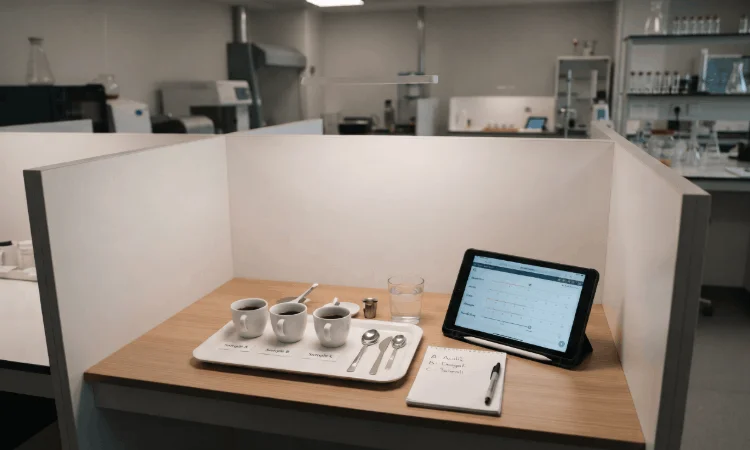
One of the critical factors determining a food product's commercial success in the market is how consumers perceive the product through their senses. Sensory analysis in foods is a professional testing discipline that measures, analyzes, and interprets the reactions that products evoke in the senses of sight, smell, taste, touch, and hearing according to international scientific standards.
Our laboratory provides food producers with objective and reproducible scientific data for their R&D, quality control, shelf life, and market positioning processes.
Why is Sensory Analysis in Foods Important?
While instrumental and chemical tests reveal a product's composition, only sensory analysis in foods can show whether a consumer will like the product or whether they will be able to perceive the difference between two formulations:
- New Product Development (R&D) and Formulation Optimization: Scientifically verifies whether the flavor and texture profile is maintained during recipe modifications (sugar/salt reduction, raw material substitution, aroma optimization).
- Support for Shelf Life Studies: Determines the critical point where sensory defects such as rancidity, staling, color change, or aroma loss begin to occur in the product throughout the storage period.
- Quality Control and Batch Consistency: Audits whether products from different production lines or different batches comply with standard sensory specifications.
- Competitor Product Benchmarking: Reveals the strengths and areas for improvement of your product compared to market leaders through objective scoring.
- Effects of Packaging and Process Changes: Detects the impact of a new packaging material or heat treatment parameter on the taste and odor (off-flavor / foreign odor transfer) of the product.
Sensory Analysis Methods
Depending on the objective of your project (finding the difference between two products, profiling a product, or measuring consumer preference), internationally validated ISO methods are applied:
1. Difference Tests (Discrimination Tests)
Used to determine whether there is a sensorially perceptible difference between two or more samples:
-
Triangle Test (ISO 4120): Panelists are presented with three coded samples, two of which are identical and one different, and are asked to identify the different one.
-
Duo-Trio Test (ISO 10399): Determines which of the two samples presented alongside a reference sample is identical to the reference.
-
Paired Comparison Test (ISO 5495): Enables the comparison of two products regarding a specific attribute (e.g., sweetness or firmness).
2. Descriptive Sensory Analysis (Profiling)
The scoring of all sensory attributes of a product—such as appearance, odor, flavor, texture, and mouthfeel—by trained panelists using intensity scales, and the creation of the product's sensory fingerprint (spider web chart).
3. Hedonic (Consumer Acceptance and Liking) Tests
Consumer-focused tests that measure the overall liking level, purchase intent, and preference ranking of the product with participants representing the target consumer group.
Which Product Groups Are Subject to Sensory Analysis?We serve all food and beverage categories with our advanced panel infrastructure and product-specific preparation kitchen:
- Milk, cheese, yogurt, butter, and ice cream products
- Tea, coffee, fruit juices, carbonated beverages, and flavored waters
- Chocolate, biscuits, cakes, confectionery, and bakery products
- Olive oil, vegetable liquid oils, sauces, and condiments
- Red meat, poultry meat, and processed delicatessen products
- Snacks, chips, nuts, and breakfast cereals
- Ready-to-eat meals, frozen foods, and functional products
You can contact our expert team to secure your products' taste, texture, and quality standards with scientific data and to receive a detailed quote regarding our sensory analysis in foods service.