Detection of Campylobacter spp. in Foods
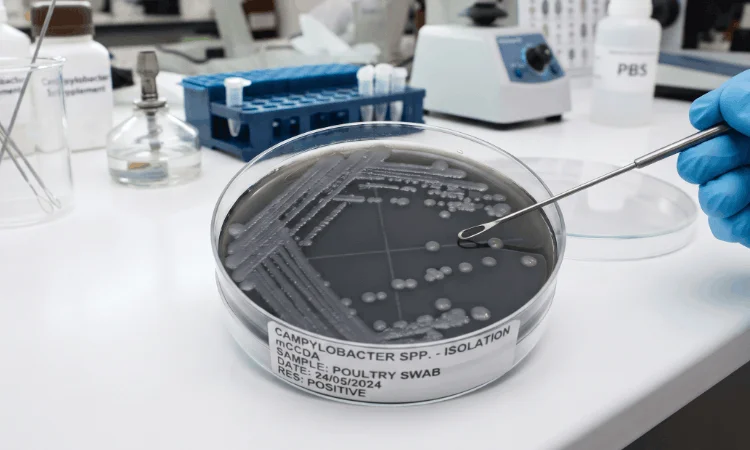
As one of the leading agents of bacterial gastroenteritis particularly associated with raw or undercooked poultry meat, Campylobacter species (Campylobacter jejuni, Campylobacter coli, and Campylobacter lari) require a different laboratory approach from classical aerobic cultures due to their microaerophilic structure and sensitivity to drying/oxygen. Detection of Campylobacter spp. in foods is a fundamental qualitative microbiology analysis carried out to prevent this pathogen, which has a low infectious dose, from contaminating foods during the slaughter, partitioning, chilling, and packaging chain, and from being transferred to other products via cross-contamination.
Within the scope of poultry carcass process hygiene regulations in the European Union (2073/2005) regulation, the Turkish Food Codex microbiological approach, and international food safety standards; Campylobacter control in fresh poultry meats, poultry parts, raw milk, and fishery products is among the key elements of food safety programs.
What Risks Does It Prevent in Poultry and Cold Chain Lines?
Although Campylobacter species generally do not multiply at room temperature in foods, they can maintain their viability under cold and humid conditions and cause infections when transferred to ready-to-eat foods or kitchen surfaces:
- Efficacy of Slaughter and Chilling Stages: It helps monitor the tendency of contamination on the carcass surface during feather plucking, evisceration, and chilling tanks in poultry slaughterhouses.
- Verification of the Cross-Contamination Barrier: It tests sanitation and separation measures aimed at preventing the transfer of pathogens from lines processing raw poultry meat or from knife/counter surfaces to ready-to-eat foods.
- Compliance with Export and Buyer Specifications: It supports with an official analysis report that the microbiological criteria requested, especially in poultry meat and processed product shipments directed to the European market, are met.
- Raw Milk and Supply Chain Safety: It allows for the early detection of contamination risks originating from raw milk or water sources prior to pasteurization.
Priority food and environmental samples examined
- Fresh, chilled, or frozen whole poultry carcasses, fillets, wings, drumsticks, and offal
- Poultry-based preparation products, marinated meats, and processed products
- Raw milk and milk samples prior to pasteurization
- Shellfish/non-shellfish fishery products and processing waters
- Slaughter, partitioning, and packaging line surface swabs
Does the freezing process completely eliminate Campylobacter?
Freezing and storage can provide a gradual reduction in the number of Campylobacter cells; however, viable cells may not be completely eliminated, and the risk may persist due to the low infectious dose. Therefore, heat treatment (ensuring the internal temperature reaches at least 70∘C) and the prevention of cross-contamination are essential safety steps.
You can contact our laboratory to document pathogen safety in your poultry and cold chain products according to international reference standards, and to get detailed information and a quote regarding our detection of Campylobacter spp. in foods service.