Yeast and Mold Count in Foods
Low water activity (aw), yeasts and molds are microorganisms that are much more resistant than bacteria to acidic pH conditions and high sugar or salt concentrations. Because of these characteristics, they are the main cause of spoilage that leads to economic loss in many food products, and the mycotoxin‑producing potential of certain mold species also poses a risk directly concerning public health. Yeast and mold count in foods is a fundamental indicator analysis that reveals the product's raw material quality, the suitability of storage and packaging conditions, and the sensory/microbiological stability throughout shelf life.
Particularly in categories such as nuts, dried fruits, bakery products, fermented dairy products, jam/marmalade groups, fruit juices, tomato/pepper pastes, and spices, it is mandatory to keep the yeast and mold load within legal limits and operational specifications.
Maya ve Küf Sayımı İşletmelere Hangi Faydaları Sağlar?
In production facilities, raw material warehouses, and pre-shipment quality controls, regular measurement of the yeast-mold load provides tangible advantages to businesses:
- Shelf Life and Spoilage Risk Management: It helps prevent complaints such as mold in bakery products, carbonation/fermentation in beverages and sauces, and taste and color deterioration in dairy products before they hit the market.
- Storage, Drying and Packaging Verification: Inspects drying efficiency in dry foods and grains, warehouse humidity/temperature control, and modified atmosphere/vacuum packaging integrity with numerical data.
- Early Warning Against Mycotoxin Formation: Since an increase in the mold load indicates the risk of synthesizing toxins such as aflatoxin or ochratoxin under favorable conditions, it ensures that preventive action is taken.
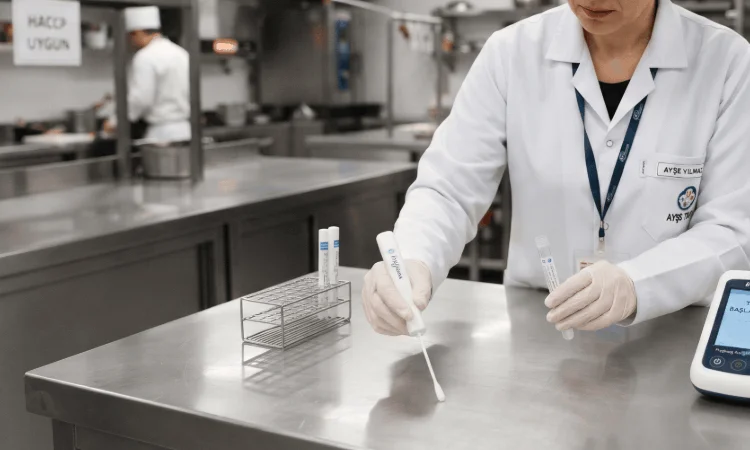
- Ambient Air Quality and Equipment Hygiene Control: Enables the monitoring of airborne mold spores and accumulations on equipment surfaces in slicing, cooling, and packaging areas.
Main Product and Sample Groups Subject to Analysis
- Nuts, oilseeds, dried fruits, grains, flours and spices
- Bread, cake, biscuits, yufka and packaged bakery products
- Cheese, yogurt, buttermilk, butter and dairy-based desserts
- Fruit juices, concentrates, jam, marmalade, honey and sauces
- Tomato paste, pickles, fermented vegetable products and ready meals
- Production area surface swabs and ambient air control plates
To verify the shelf-life durability, storage conditions, and microbiological quality of your products with scientific data, you can contact our laboratory to receive a detailed quote regarding our yeast and mold enumeration in foods service.