Testing for Vibrio cholerae in Foods
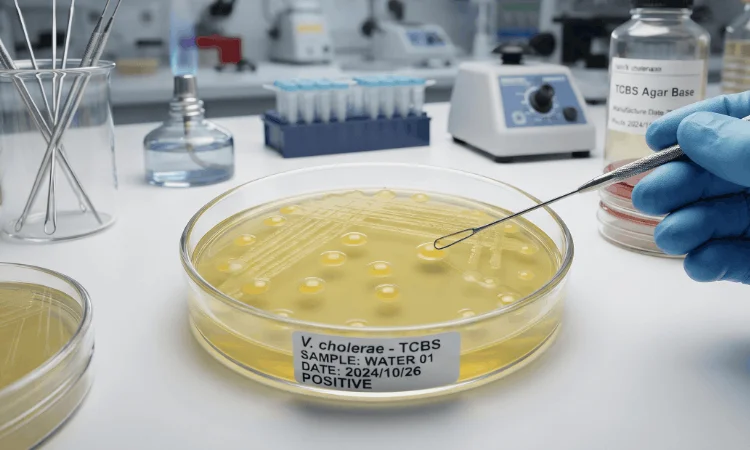
Vibrio cholerae, which can be found in the natural flora of marine and brackish water ecosystems, adapted to salty environments, with a comma‑shaped (curved rod) morphology, is a high‑risk food and water pathogen that can be transmitted through foods, especially raw or undercooked seafood, bivalve mollusks, and foods that have come into contact with contaminated water. Testing for Vibrio cholerae in foods is an advanced qualitative microbiological analysis carried out to prevent the infiltration of toxigenic strains that cause cholera (primarily O1 and O139 serogroups) as well as enteropathogenic V. cholerae strains that can cause food poisoning into the seafood supply chain.
Turkish Food Codex Microbiological Criteria Regulation, within the scope of EU water product hygiene rules and international export/import health certification requirements; screening for Vibrio cholerae in fresh, frozen and processed water products is an important food safety control.
What Risks Are Covered in Water Products and the Export Chain?
During periods of rising water temperature, Vibrio species whose concentration can increase in sea and inland waters require careful monitoring from harvest to cold‑chain distribution.
- Safety Approval for Shellfish and Fish‑Based Water Products: Certifies zero‑tolerance safety for mussels, oysters, scallops, shrimp, squid and fish fillets used as raw material for sushi/sashimi.
- Export of Water Products and International Health Certification: Meets the microbiological pathogen screening criteria requested by overseas buyers and border checkpoints with a fully accredited analysis report.
- Control of Washing, Glazing and Ice Water: Prevents secondary contamination risks that may arise from seawater, process water and ice lines that come into direct contact with products in processing plants.
- Verification of Cold‑Chain and Storage Discipline: Inspects pre‑market to ensure that bacteria do not rapidly multiply and reach an infective dose due to post‑harvest cooling delays.
Priority food and environmental samples examined
- Bivalve mollusks (mussels, oysters, sea urchin, sand clam)
- Shellfish and head‑to‑tail aquatic products (shrimp, lobster, crayfish, squid, octopus)
- Fresh, chilled, frozen, salted or marinated marine/freshwater fish
- Process waters, seawater and ice samples used in processing plants
- Production line, cleaning stations and packaging surface swabs
To document the pathogen safety of your water products and export batches according to international reference standards, you can contact our laboratory for detailed information and a quote on our testing for Vibrio cholerae in foods service.